


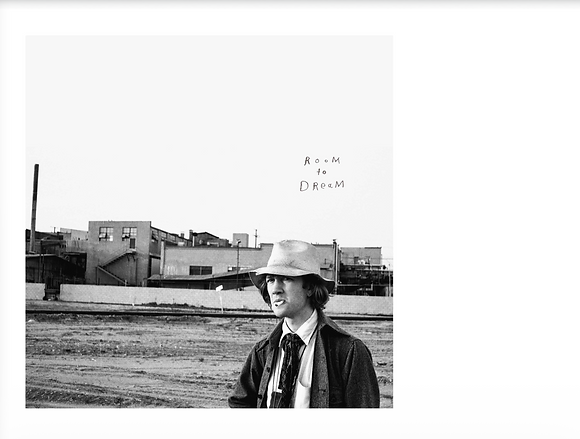

RIP David Lynch (1946–2025)
A visionary filmmaker, artist, and storyteller whose work continues to shape how we think about narrative, emotion, and imagination.
Dream with Lynch is a critical book review and creative research project inspired by Room to Dream. Through close reading, visual research, and written analysis, Angel explored how David Lynch built a creative voice through memory, intuition, discipline, and a lifelong commitment to artistic experimentation
Building the Narrative
Before writing, Angel began by mapping recurring themes across Lynch’s life, films, interviews, and personal philosophies. From meditation to collaboration, each observation helped build a deeper understanding of how his creative identity was formed.


Dream with Lynch
The tip of the iceberg can make people forget how much of it is hidden below the water, and the iceberg theory also applies to people. People often only see the surface level of a person's life, with much more going on beneath the surface. A brief introduction is often insufficient to cover a person's complex life fully; even a book can only cover so much. If a book can expand readers' knowledge, it is relatively intriguing. Introducing a well-known person requires careful consideration of the format and content, as they can reveal much about the character being introduced. Typically, biographies are written in the third person or through the subject's own memories. However, memories can vary, and it is hard to say which version is the most accurate. Piecing together multiple perspectives can help uncover a more accurate portrayal of events. The act of recalling memories is often more appealing than the past events themselves. Biographies that include multiple perspectives are rare but offer more room for readers to explore.
Room To Dream is an autobiography that unfolds David Lynch's life story and art career. This book narrates through dual perspectives, both third person and first person. Kristine McKenna, a critic, journalist, and close friend of David Lynch, collaborated with him to co-write this book and published it in 2018. Mckenna authored this as the eleventh book, and Lynch wrote the seventeenth book. They aim to present authentic and close-to-truth narrations, with the subject playing a prominent voice. The writing follows the chronological order of David Lynch's entire life, from his childhood to the most recent times, and the book is divided into different chapters according to period. Mckenna opens each chapter in the traditional biography style, with an objective view, including many interviews with the people who played essential roles in Lynch's life to complete the picture of David Lynch's life. After Mckenna's narration, Lynch would write about the same period in his life subjectively in the second half of the chapter, but he would add on top of Mckenna with more details or shift to a different focus.
They stated the book's purpose clearly in the introduction: "a person having a conversation with his biography" (XI, Lynch, Mckenna). Room to Dream teaches nothing technical regarding filmmaking production but explores different insights about David Lynch's emotions, life journeys, and the process of his art creations. The book's title contains hidden connotations that may require further interpretation as readers dive into David Lynch's world.
The book's innovative design provides more well-rounded insights, allowing readers to depict it differently as they flip through it. The book's structure, which presents two perspectives in one book, is a metaphor for the movie's dual audio track, where different information is simultaneously showcased in the left and right audio channels. Lynch paid great attention to audio while making the movie, and this mindset may have led him to format his book in this way. Dualities are a significant theme in Lynch's life, as he has always known that things have two sides that may contradict each other; he believes that "nobody is all one thing" (206, McKenna). David Lynch does not view the factual series presented by Mckenna in the same way as others, as he has different interests. Most of the time, Lynch would start with the phrase "I don't remember doing this" or "I don't know how I got the idea of that." However, this book has limited opinions that Lynch had on Kristine McKenna's writing, for Lynch would mainly continue the chapter with his version of the memory.
It is fascinating to see the difference between his narration and others in the same book, and this also gives power to the readers, the power that is absent back then, as if they can witness the past sequence of events in an ominous view. Some of the narrations in David Lynch's sections seem disjointed, but they match his personality as they are like transcribing his thoughts onto paper. Logical inconsistency does not mean he did not think it through, but he is trying to quickly redevelop the memories onto the pages; it is like viewing the process of retrieving memory efficiently and authentically.
The book focuses on the past more than the future; thus, it is a book that opens from memory. Lynch once mentioned in his movie Lost Highway, he said: "I like to remember things my own way . . . not necessarily the way they happened." He set the foundation for this particular memoir style as he dealt with his memory, and seeing his stream of thought written on paper could distinguish him from ordinary human thinking. Considering Lynch's seventy-seven age already, perhaps it is one of a few chances for him to revisit his life and share some private moments with those who appreciate his works. The book also included many photographs documenting different periods, which is rare to see in public. Room To Dream combines biography, memoir, filmography, and archival photo collections. The groundbreaking layout makes Lynch express his uniqueness again, leaving the perception for people to say, "that's so Lynch." As the book reveals the different identities that Lynch holds, it can also be viewed as another piece of art that Lynch produced and an ultimate meditating process that he enjoys doing during his spare time.
Most people only recognize Lynch as the award-winning film director. However, this book allows more room to reveal what was happening behind the scenes. Lynch wears multiple hats that are beyond the role of director. He gets involved in many areas like set design, editing, special effects, audio design, and many more areas in filmmaking he would get his hands on. He did many more things besides filmmaking, including painting, photography, singing, furniture design, building web pages, writing, and many more. He can also work on multiple projects simultaneously, and many of his artworks are highly underrated. With the book's description, viewers can see some of his art pieces, especially in film, have merged elements from his other works; one example is that he started to put his thoughts on an actual material with painting, and as he paints with the emphasis on darkness and senselessness, the idea of moving painting comes into mind, and that is the reason for many of his cinematography maintain the feeling of painting. For Lynch, it is not rare to see him making new attempts in life, and he is serious when he ever tries something new.
Thus, a bold guess can be made about this book, another art form David Lynch is experimenting with during his elderly time. He is always trying new things, and many people may also have the same desire to make attempts, but they are usually hesitant to make the first step due to their lack of courage. People may also be anxious about their uncertain future, but they do not realize that genius like Lynch was also in the same boat as the rest, back in his college days, he "was like being lost… hadn't found [his] way yet and maybe [he] was worried about it" (77, Lynch). Lynch is thinking and doing things rather than idly waiting for magic to happen. In addition, Lynch does not believe he can only stay on one track, and he can start whenever he wants in his lifetime; he is multifaceted in different types of creativity. However, Lynch is not randomly putting himself to try new things; he has his principle to follow, which is "[o]nce you start down a path you've got rules, and you have to obey the rules of the path you're on" (405, Lynch). Following the rules that he sets makes the process flow in a more organized way.
Lynch continues to explore new things even though he is already booming, and learning through trial and error may be part of his success. Lynch can also dedicate himself and put time into the art he is working on; one example is that he can isolate himself from society, even his family, to craft something hard to achieve for most people. However, Room to Dream can inspire people to at least try what they wish they could do, regardless of age. One of the most celebrated suggestions in the book is that attempts at multiple things are not equivalent to loss or failure, but perhaps quitting is not acceptable.
In Lynch's early life stages, he was introduced to meditation in 1973, a life changer and something Lynch devoted to other than his art career his entire life. In the chapter "Spike," McKenna mentions his agent commented that "[e]veryone who knew Lynch was struck by how meditation changed him…It made him calmer, less frustrated, and it lightened him. It was as if a burden had been lifted from him" (105, Mckenna). Meditation may also be helpful for Lynch's career success, which shapes Lynch into a person with a better temperament. Meditation calms him when he meets unexpected situations and creates a positive attitude for better communication. As a result, no one sees him lose himself on set, and he can quickly come up with improvisation to resolve issues. Through meditation, Lynch realizes that "anger is a weakness that poisons you and the environment around you. It's not a healthy thing, and it's not good for relationships" (131, Lynch). One example for the improvisation is when he was filming an exterior scene; the producer said they should reshoot the scene inside because the weather was inconsistent with the previous day.
However, he promptly asked a few kids playing water hose in the background to work around the rain. Crew members and actors are impressed by his mindset. Meditation also helped Lynch with the creation by providing inspiration and saving him mentally during some tough times in his career. The text shows readers that he is not always as successful as others would imagine, and sometimes, he is just as ordinary as any average person. The films Eraserhead, Dune, Blue Velvet, and Wild at Heart did not receive positive comments and were initially controversial, but the failures did not defeat Lynch. Instead, he gathered himself back together and moved on to the next project. A positive attitude is also crucial for new opportunities, and staying optimistic like Lynch may find more luck for oneself. Writing this book also provided Lynch a moment to reflect on his life, and this may be like doing meditation and making him more relaxed. Sometimes, a book cannot provide a universal answer to all the problems, but the readers can understand it by observing. Thus, this book encourages many people from multiple age groups in many ways, for it covers many periods in life, and many of them perhaps experienced something like Lynch.
According to the writings, this book can also inspire people through the Lynchian way of thinking, freewheeling, to be more precise. Many times, Lynch uses his instinct during creation, and this may be because he believes in fate; Lynch believes that people come to the world in a predetermined way, and despite how the surroundings play an impactful factor, something about people is set. Many of the films that Lynch directed do not result from hard thinking, but he feels the idea in his mind instead. For instance, in the preproduction of some films, Lynch admitted that he “felt Eraserhead, I didn’t think it…without filters of any sort, Eraserhead is pure id” (95, McKenna). He often casts people with instinct as well; sometimes, he casts people at first sight, and sometimes, he knows deep in his heart that the characters are only reserved for some actors. The casting process enhances Lynch’s work, and when Lynch meets the right actor, some scenes only require one take to complete.
For example, by working with his intuition, he can get good performance from any person he knows, even some non-actors, and he can also complete a scene with Richard Farnsworth and Wiley Harker in Straight Stories with only one take and without rehearsal. In addition, Dennis Hooper, another actor Lynch chose based on instinct, acts in “the way the words in David’s script lifted off the page with Dennis’ s performance” (209, McKenna). The natural sense provides grounds for Lynch to be optimistic and confident, for he knows issues will be eventually resolved. For the people who know Lynch well, they know that he “is an intuitive but not impulsive filmmaker” (219, McKenna). He knows exactly where each item on the film set should be placed, from the props to the camera placement, and he is sometimes the only person on set who knows the big vision in his mind. He is always present on set to ensure that what he has in mind can be put into reality to some degree.
Returning to the concept of fate, Lynch has witnessed many people come and go throughout his lifetime. He meets people when he is thriving, and some of his closest friends who worked with him for many years pass away at a relatively young age or die before filming Twin Peaks: The Return. Although the book does not have many narrations about his reactions when facing the death of people around him, most of the emotions are reflected in his work. He shapes his passion through motivation, influences those around him to work like him, and takes whatever life throws at him. His soul gets purified "as a result of sorrow or joy. He's a master at moving energy around, too." (McKenna, 482). It must be challenging for Lynch, yet he does not give up. Recently, Emily Stofle filed for divorce from David Lynch after fourteen years of marriage, and this is perhaps one of the other incidents that marked Lynch's fate. Emotional episodes in Lynch's life propel him to be creative continuously, and he takes all the relationships in his life as inspirational.
Lynch also leaves many personal imprints in the book, just like he did in all the film sets he had worked on before, and readers can see the playful quality that Lynch carries in multiple places. He focuses a lot on the details, even something small that the audience would not even pick up at first, and he would be delighted if he could have control over many aspects during the process and do things by himself. In the case of this book, he uses his handwriting for the title and chapter names; the handwriting components make the book more tangible to the readers and add a sense of handmade feeling, like looking through Lynch’s personal notebook. In the sections that Lynch narrates, he incorporates many vivid anecdotes that bring the readers closer to his life.
He also includes a short letter on the last page of the book, which is also handwritten. He wrote to his parents asking them not to watch his first feature-length film, Eraserhead, which reveals the inner self with the unescapable dream and anxiety. Nevertheless, the film does not explicitly tell the audience they are watching a sequence of fictitious bad dreams. Eraserhead is more than a horror film; bizarreness, discomfort, and rejection of taking responsibility fill the movie like a nightmare; perhaps Lynch does not want his parents to see him in the shoes of a coward who only wishes to run away from the responsibility of becoming a father. Maybe Lynch himself is also uncertain about the outcome of his first film, and he may not be confident enough to see people, especially his loved ones, not understanding and appreciating his work. Although the Lynch family is supportive and encouraging, David Lynch sometimes goes beyond what people expect from him, and he may not want to overwhelm them. Lynch gradually distinguishes himself through his film language, knowing that his film is not for everyone.
Other examples of personal marks include recurring emotions, objects, and locations. For instance, the small city of Boise in Virginia, where Lynch spent most of his childhood with his family, was mentioned at the beginning of the book and left a substantial impact on young Lynch. The blue velvet sofa that Lynch had when he was in Philadelphia also left a deep impression on him. Art comes from life, and it goes beyond real life; this is also the case for David Lynch himself, "he understands the human psyche and emotions, and human heart…he projects his own emotional and sexual turmoil into his work and assaults us with the feelings he's being assaulted by" (156, Mckenna). He does not only sit with the issues he had in life. Instead, he turns them onto the screen and shares them with the audience; he turns the emotions in life into an abstract form of the notion that reoccurs in his films; sometimes, he emboldens himself onto the characters. As a result, he later incorporated pieces from his hometown, different objects in real life, and his life experiences into his productions or the dream room he constructed that allow the audience to immerse.
Based on reality, his work is more persuasive, yet it comes with more subtle layers of meaning; they cannot be connected to various dots or draw equal signs on certain Freudian symbolism. The elements scattered in Lynch's life and the book are connected into a thread that runs through different times and spaces. The personal imprints and some closetoreality descriptions make the readers, especially Lynch's fans, feel connected to him with the ideas that Lynch found. Viewers can get to know David Lynch's thoughts about behind-the-scenes and personal life better as they read the book, even though Lynch wishes the audience could have their own interpretations as if they were watching one of his movies. Lynch's traces that spread throughout his life in different timelines also stretch across the book, and they keep coming back in different chapters. For example, he learned two most important rules from his family; the first one is not to treat others in a crappy way, and the second, if he wants to do something, he must do it well. He carries the two standards of behavior throughout his life and work.
With the combination of meditation and the critical faith that Lynch follows, he keeps his surroundings in a good-natured sense. No one who ever collaborated with him did not find him charismatic, and many people from various movie sets with whom he had worked admitted that working with Lynch was the best experience they had ever had. Lynch not only directs the actors to act better in his films, but he also influences them in the long run. For example, Dana Ashbrook, the actor from Twin Peaks, once said, "David's the reason I can still be an actor… He's like the greatest teacher you ever had and is the truest artist I've ever met" (482, McKenna). Lynch is also generous when helping people outside of film sets, especially relating to meditations. He agreed when people asked him if they could use his name for the foundation; he said yes because he "figured he [Dr. John Hagelin] wanted me to say yes…and [Lynch] put[s] the first money into it" (438, Lynch). Their good temper and patience bring more than a companionable working environment but also grant Lynch many supports and opportunities; the goodness that Lynch shared with others returned to him at some point.
Lynch must meet people like Jack Fisk, Bushnell Keeler, Stuart Cornfeld, Doreen Small, Tony Krantz, and Pierre Edelman, who are talented and sometimes pushing Lynch to succeed; without the help from the people who understand Lynch, much of his work will not be move from the script to the screen or his work will not be screened for greater audience. Growing up in a supportive family gives Lynch many freedoms to find what he likes and who he is; he knows how to achieve his goal at a very young age. Lynch is not stingy when giving out compliments, and he has mutual support and respect for the people he collaborates with; perhaps it is inseparable from his supportive family and people who are like-minded to him that appeared throughout his life. David Lynch has a good heart, differentiating him from secularity and bringing him to a higher, more valuable level. Lynch puts sophistication into his pieces with avant-garde surrealism. He would touch almost every aspect of production, and he is willing to spend a lot of time and effort to make sure he actualizes the visions he has in mind.
He can also work with so little to create a fictional yet believable world, starting with his student film Eraserhead. He can work with a meager budget and he loves seeing the purist world he created. His professionalism does not conflict with his will; he "acted like a grown-up, but the kid in him directed the movie" (149, McKenna)—part of Lynch's success is linked to his high self-esteem. Even after the age of seventy, he would "only sleep four hours a night, and [his] schedule wasn't easy" (501, Lynch). He is purely working for his passion, and he does not think it is tiring. David Lynch is irreplaceable, making him iconic, and no one in the world can be the same. Therefore, Lynch is so unique that people start to use "Lynch" as an adjective when people appreciate his work. Working under this spirit ensures that he stands out from the rest of the people in the industry, because he has different dreams than the rest. When he was directing Dune, he felt like that was not his film after it was edited, for many parts that he envisioned in mind were omitted due to the time restriction and the preference of the distributor, so he blocked himself after finishing the film.
He would not compromise his ideas to money. One of his agents, Rick Nicita, comments that "David is eager to make money, but he won't compromise and never has…David keeps it very pure. There are temptations in this business, and his success bred forces that tried to corrupt him" (176, McKenna). Practically speaking, making art is an abstract way of generating profit, but for Lynch, he creates and produces only following his own free will; it is not that he does not need the money, but he is more interested in producing work that aligns with his passion. Lynch continues to defy turning art into a commodity and keep art in the most authentic form with pure intention to have fun. He enjoys the process when he is creating new, fun things and when he has more control over the details rather than restricting himself from meeting requirements from the sponsor. He also creates more work that projects his voice to the public; for instance, for "Lost Highway, Lynch reminded the film community that he wasn't making movies for them and was answering to the higher authority of his own imagination" (342, Mckenna).
The only person that Lynch would listen to in the world is himself, and he objects to people who do not share the same conception as him. At first, Mulholland Drive is produced as a TV series, yet Lynch objects to every note that ABC gives on the first pass. However, his agent, Tony Krantz, made changes based on the comments, which caused Lynch to stop collaborating with him. He admits that "David has the art part, but he does not have the piece that guarantees success in the entertainment industry, which is a collaborative community" (372, McKenna). Lynch is not willing to compromise. He is protecting the purity in his mind and those who fancied his work by creating a series of "dreams" throughout his life and in this book.
Dream is a recurring theme in the book Room to Dream. It begins with the book's title and encompasses various interpretations. The dream concept could be the believable and physical sets Lynch created for the audience to enter an alternative world. It could also refer to the nightmares that were depicted on screen. Additionally, it can be the ideal workspace that Lynch established for the cast and crew or even the floating places that only exist inside Lynch's mind. Dreams may also emerge from meditation and isolation time Lynch had while working, and it can be the source of inspiration that enlightens people and provides solutions to impossible realworld problems. It may also refer to the unnatural world, which Lynch unfavored, people live in, and perhaps the dreamscape is the shared mesmerized feeling for all human beings. The real life may only be a dream, and Lynch's art is not a dream but an invitation to continue dreaming with him. It is also possible that Room to Dream is a stage where people can actualize their big aspirations by taking the first step or continuing to imagine and discover more in their fantasies.
The disconnecting stream of thoughts that Lynch presented in his section is also like the status of dreams. The spatiality of the dream can also be interpreted to anticipate the future. Dreams may veil the present with mystery, and the uncertainty may also be a part of people's pleasure. There is more to the dream that is not captured in the book, and readers may not know what it means to Lynch. He wrote this book with Kirstein McKenna in the hope of open interpretation. However, it is fascinating that audiences can be immersed in the dream world that Lynch projected. Forever, in dreams.
Key Quotes & Reflections
Throughout Room to Dream, Angel collected recurring thoughts on creativity, discipline, memory, and artistic identity. These passages offered a deeper look into how David Lynch approached both life and storytelling, revealing the philosophies, habits, and perspectives that shaped one of the most distinctive creative voices in contemporary cinema.

“His work always has complexity and depth and layers of meanings.” (310)
“Once you start down a path you’ve got rules, and you have to obey the rules of the path you are on, and then you can’t go down two roads at time.” (405)
“I think you know what you’re going to do when you’re a kid.” (53)
“I think peoples memory are different.” (299)
“Free to tell their version of events as they saw fit.” (XI)
“An elaborate hallucination that could never be mistaken for the work of someone else.” (335)
“Lynch apparently never doubted his ability to handle the film—he’s fearless when it comes to art.” (144)
“I think fate plays a huge role in our lives.” (32)
“David is an extremely disciplined person, and that’s part of why he accomplishes so much.” (185)
“Most people don’t know what they want to do in life and you are so lucky that you know what you want to do.” (30)